Case study
Reducing customer support load by creating a self-serve expereince
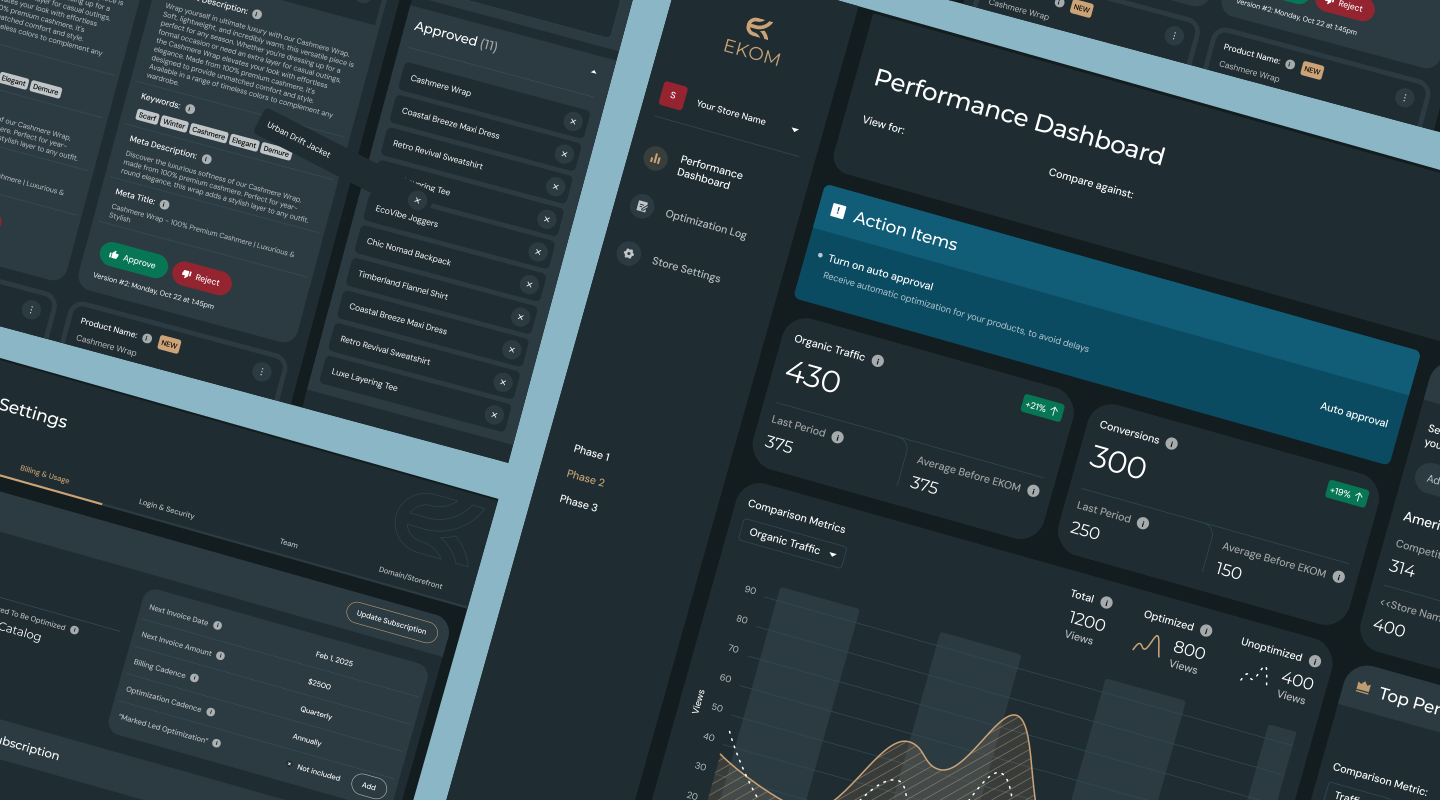
Why they brought us in
EKOM is an AI-powered platform that helps e-commerce brands keep product listings optimized as consumer trends shift. It automatically updates titles, tags, and metadata so brands stay discoverable.
The AI worked. Customers were getting value.
The problem was that customers couldn't see that value without help… which meant lots of emails and "let's hop on a quick zoom call so we can show you."
Configuring accounts, interpreting performance data, understanding what EKOM was optimizing and why, all of it required the EKOM team to hop on calls and walk customers through it.
The product was growing, support load was growing faster, and the internal team had become a dependency for basic actions.
Marketing and operations teammates were giving developers product instructions and the experience was confusing, so users often got lost and frustration began to grow.


What EKOM does
EKOM optimizes catalogs' to make them more searchable by updating descriptions, titles, and metadata regularly to align with ever-changing search terms and trends.
Self-Serve Performance Dashboard
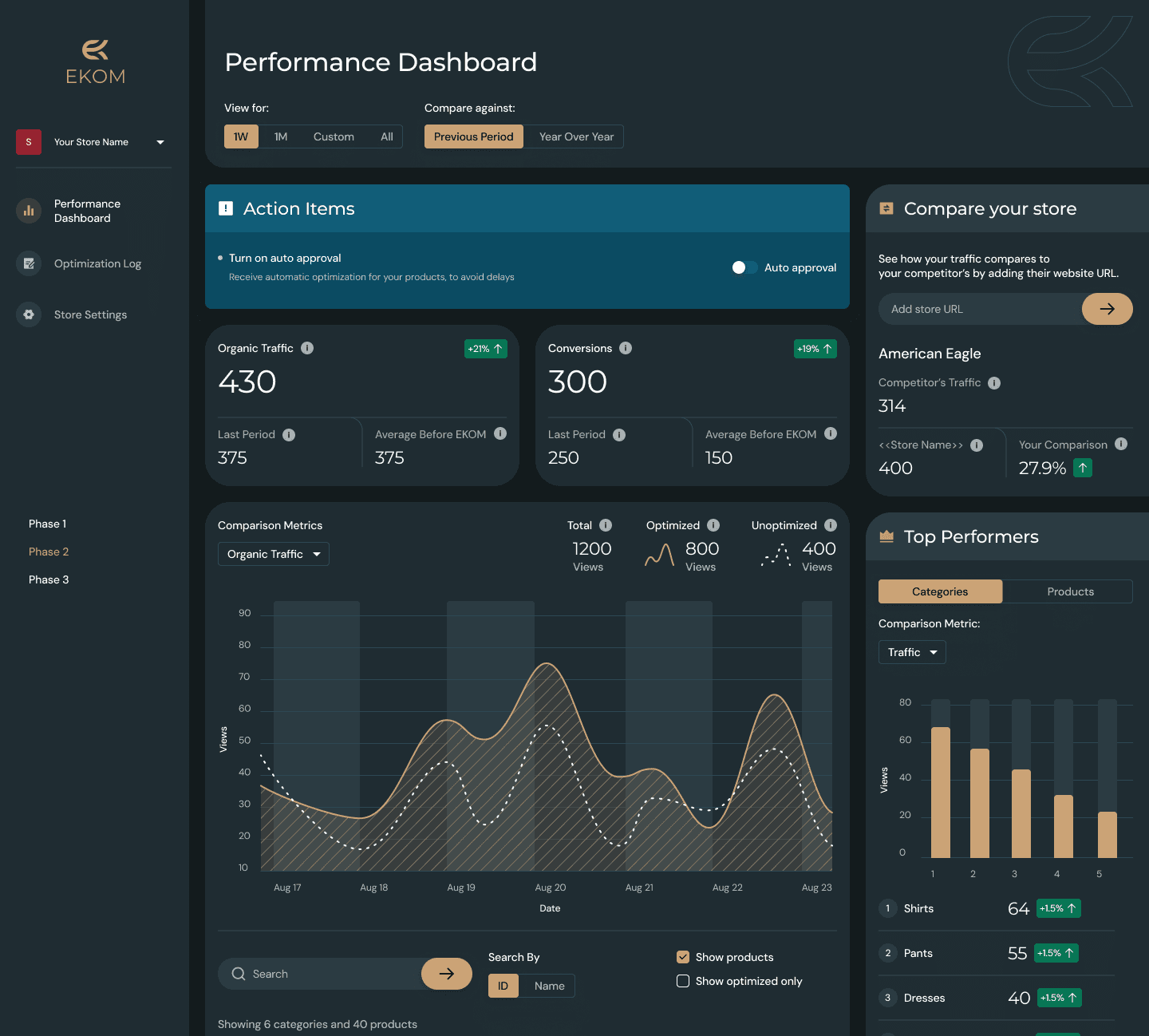
We redesigned the customer-facing performance view so brands can see exactly how individual products and categories are performing, without needing an EKOM rep to walk them through it.
User Insight: E-commerce ops people don't want a meeting to see their numbers. They want to open the dashboard before their morning standup, scan what's working and what's not, and move on.
The dashboard had to be skim-friendly and be able to answer "is this working?" in five seconds, with the option to drill down only if something looks off.
Why it mattered: Customers stopped depending on EKOM's team for status updates. Trust went up because visibility went up, not despite it.
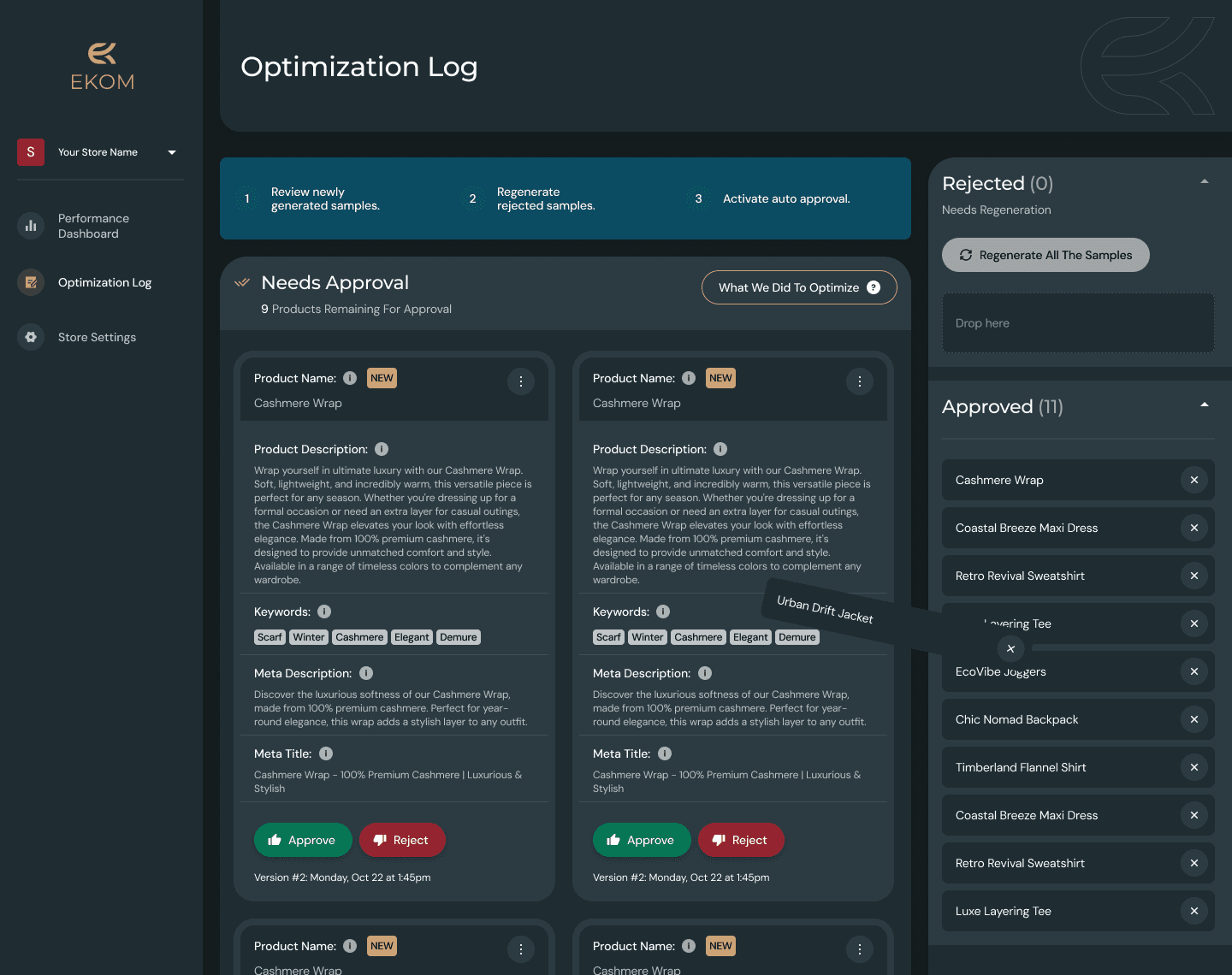
AI Training: Batch Approve / Reject for Product Descriptions
We designed a self-serve experience for customers to review and approve AI-generated product descriptions in batches, giving feedback that trains the model on their brand voice.
User Insight: E-commerce brands have hundreds (sometimes thousands) of SKUs, each with brand-specific voice rules. An AI model can't learn a brand by reading the style guide. It learns by being corrected. The interface had to make correction fast: easy approve, easy reject, easy to move through volume without it feeling like a chore. The team that doesn't want to do this work won't, and the AI never learns.
Why it mattered: Customers got AI output that actually matched their brand. EKOM stopped manually configuring every account. The AI improved faster because the feedback loop existed.
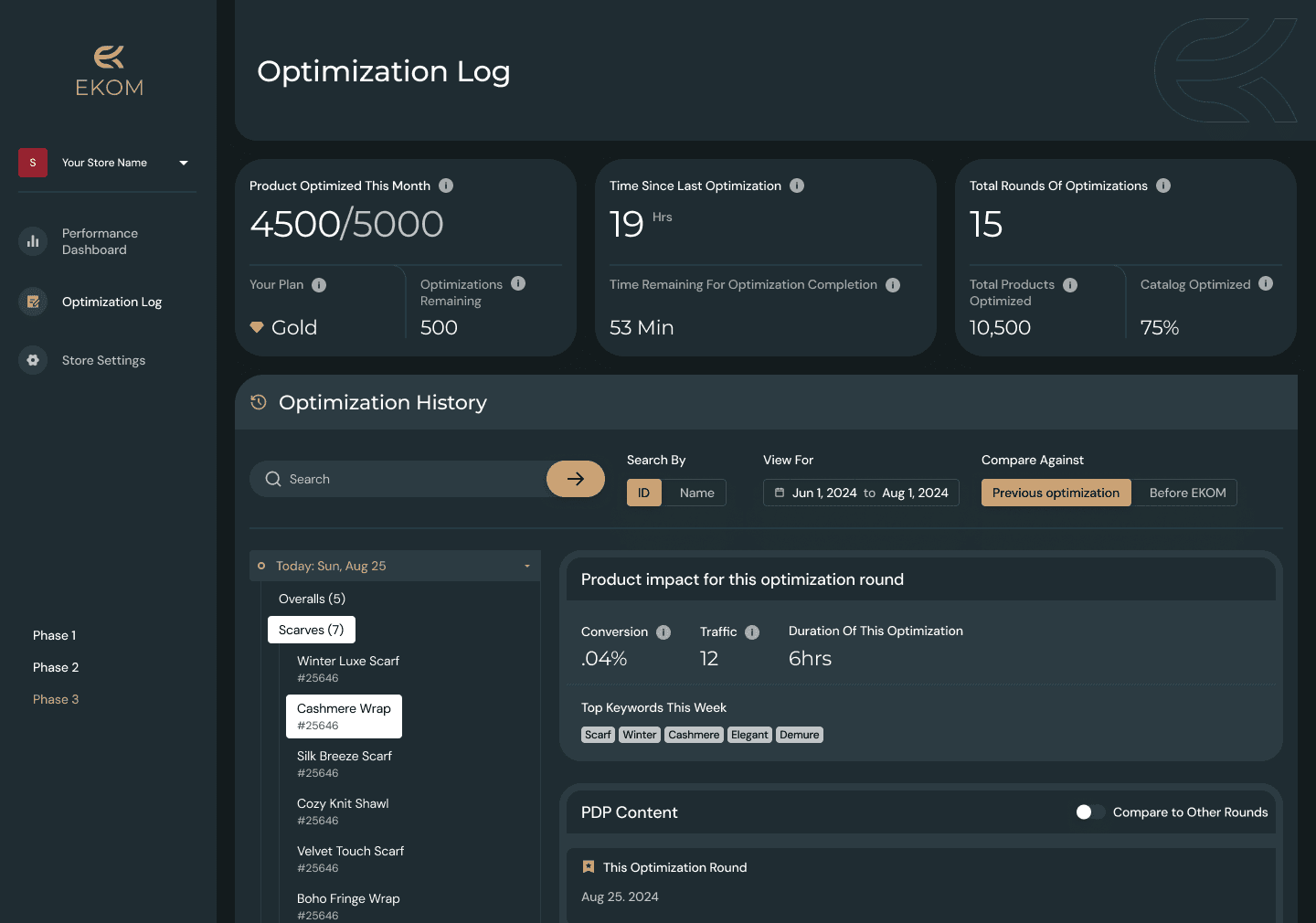
Optimization Log with Customer Feedback
I designed a transparent log showing customers exactly which products EKOM had optimized and what was changed, with the ability to give feedback that adjusts future optimizations.
User Insight: AI products live or die on trust. When customers can't see what the AI is doing on their behalf, they assume the worst, even when the AI is performing well. The optimization log isn't a feature, it's the trust mechanism for the entire product.
Why it mattered: Customers shifted from "what is EKOM doing to my products?" to "I can see exactly what changed and why."
Outcomes
Reducing customer support hours
customers gained agency without losing trust
Refined UI and style library
Design system and look and feel
Elevated product experience
Cleared workflows
Transparency for customers
Features designed just for them