Case study
Vibe-Coding Got Them to MVP.
Then They Hired a Designer.

The Setup
LexMed is an AI platform built for Social Security Disability attorneys — a high-volume, high-stakes legal practice where a single missed line in a medical record can decide a case.
The founder is a practicing SSD attorney who vibe-coded the original MVP himself in Claude. The product worked. Attorneys loved it.
Then the company started growing faster than the product systems behind it.
Here's what that looked like:


The social security disability lawyers have their hands full…
Hopefully you've been fortunate enough to know nothing about the social security disability process in the US.
There are a few (yet long and grueling) steps for someone to get approved for disability. The claimant must:
Submit an initial application with medical records and case info. It can take 4-8 months to hear back, and ~70% get denied.
Then a claimant has 60 days to file an appeal, this is usually where a social security disability lawyer comes in. That has a ~85% denial rate.
If the denial gets reconsidered by the board, the claimant can go to a hearing in front of a judge. This can take 1-2 years.
If the judge denies the claim, then it can be appealed and taken to federal court.
When someone gets hurt and cannot work, often they can't pay their rent, bills because they can't work.
Social security disability lawyers don't get paid unless they win a case. They aren't paid hourly, and their earnings are capped.
They must be strategic of which cases they take. The ones they do end up taking on have hundreds of pages of medical records and not enough time to feasibly put together a thorough case.
What LexMed does
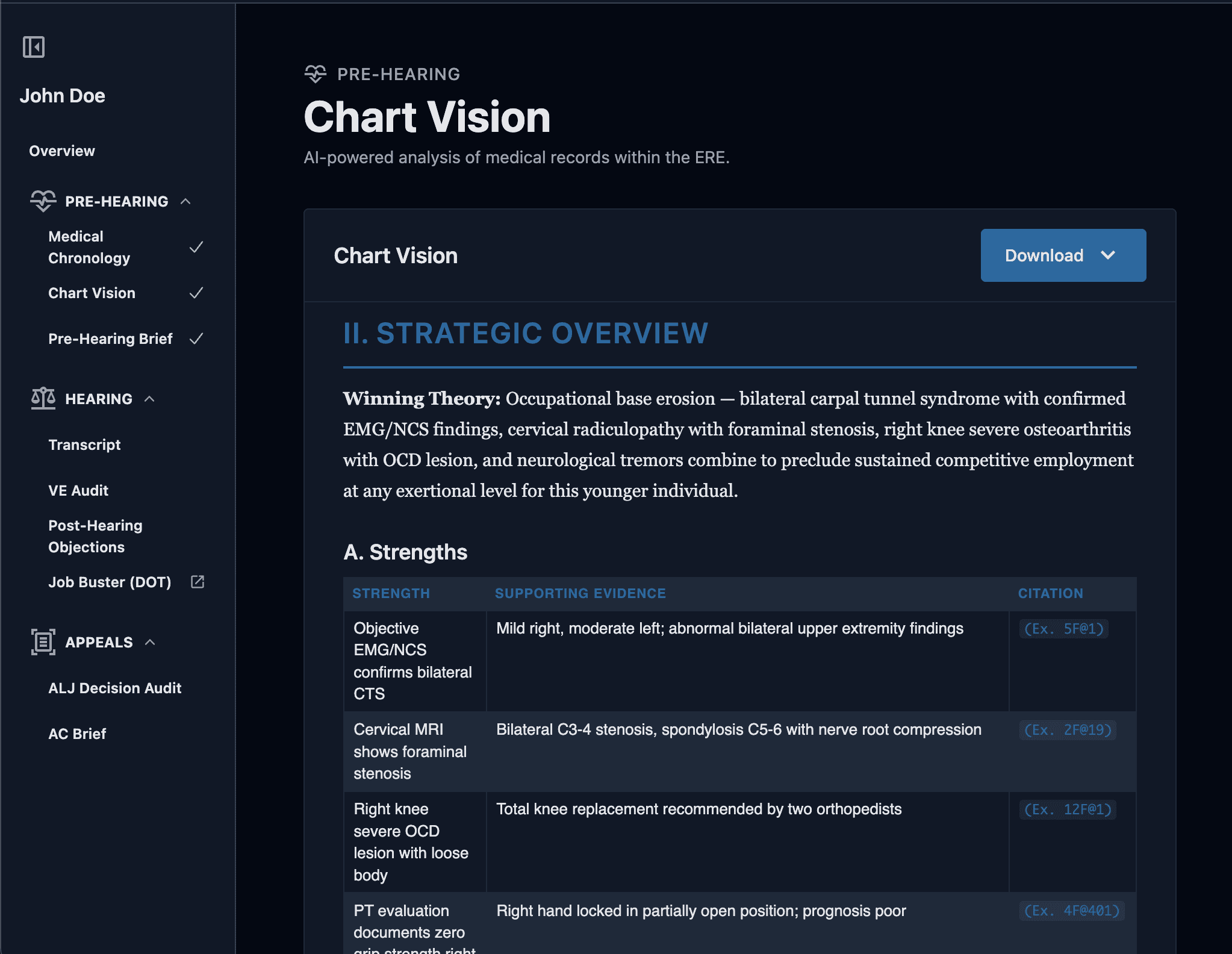
LexMed helps SSD attorneys give every case the thoroughness it needs that wouldn't be possible otherwise due to time constraint. Sifting through 2,000 page medical records and pulling winning arguments can now be done in less than 10 minutes.
Design Features
2025
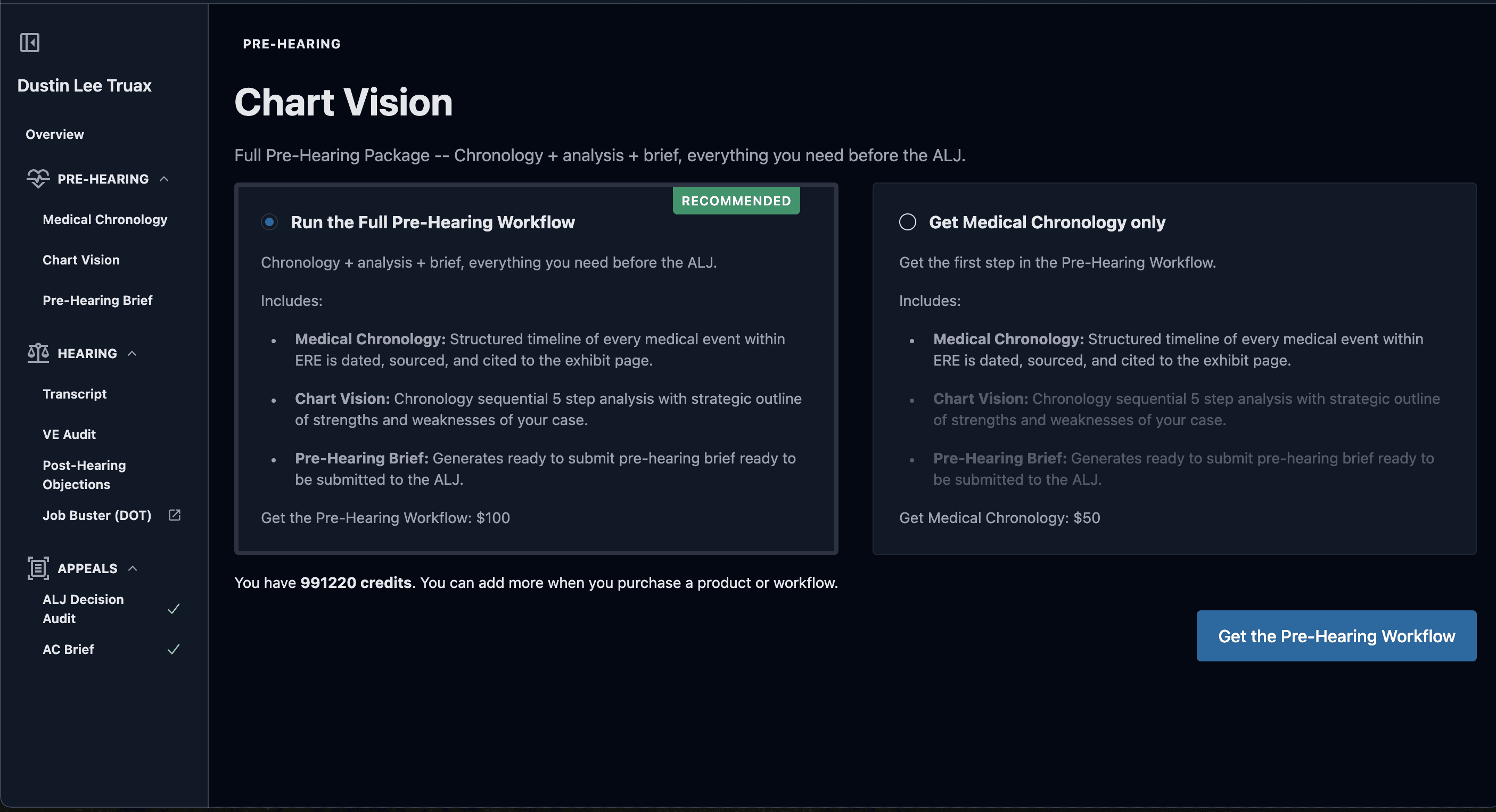
Upsell workflow
Previously, the products were presented as a random bunch of products the user could buy. There was no clear grouping.
We gave products a clear home: Workflow.
The users could intutively know what products they would need naturally based on where they were in the case life cycle.
Many products depend on each other to run, so it makes it easier for the user to know they should buy all the related workflow products together instead of piece-meal.
LexMed also gets a boost in product sales when they can sell more as full workflows, rather than ad-hoc products.
Adding visibility of all products
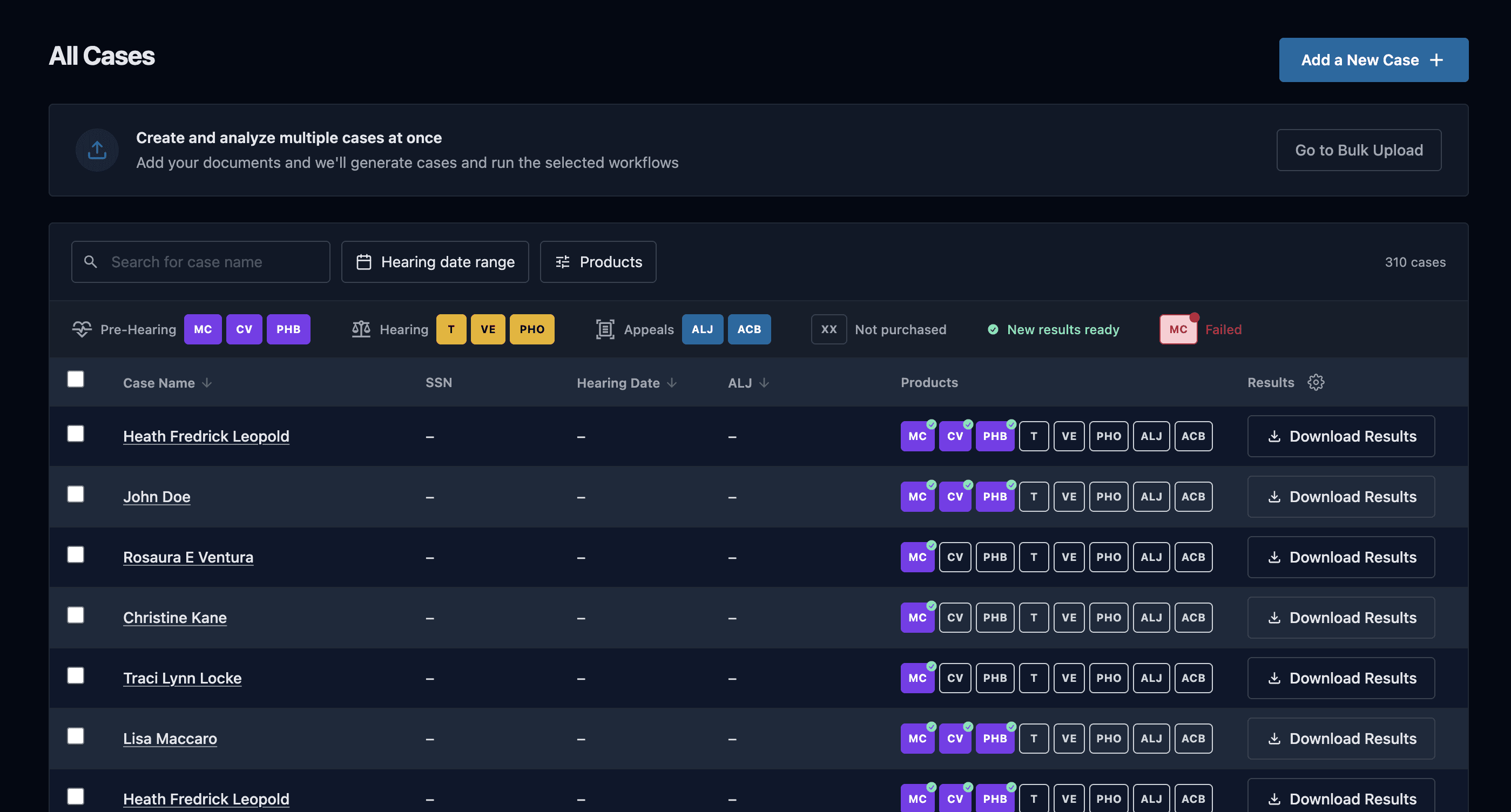
Users are handling hundreds of cases, all in different parts of the case lifecycle. Not all products are necessary at every moment. Some are created specifically for the before the hearing, some are for an appeal.
There wasn't a way for the user to know which products they had purchased, without going into every individual case and clicking on a product.
We created a refined "All Cases" page that highlights all the cases and their respective products for quicker decision making of which products are still needed, and which have already been run.
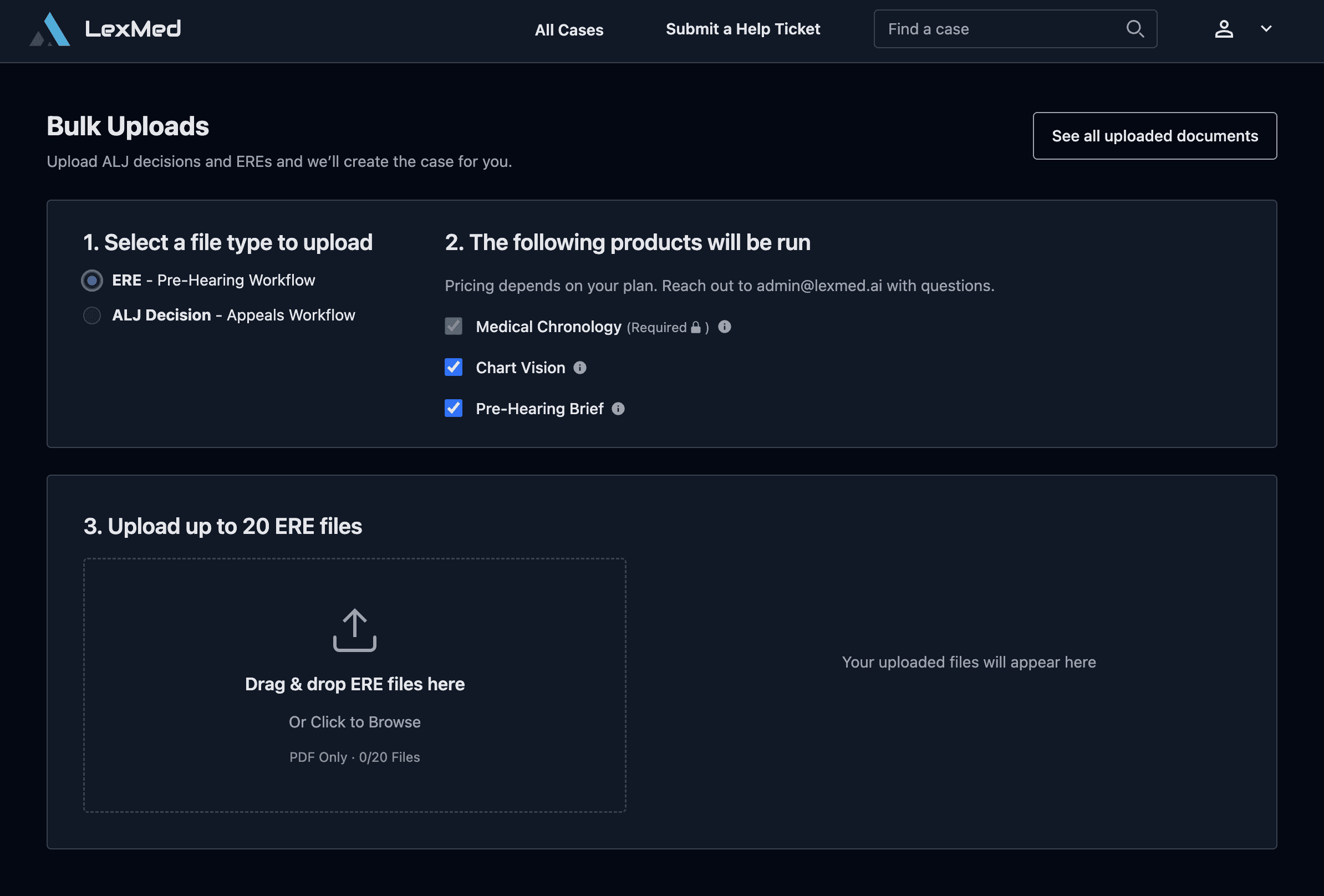
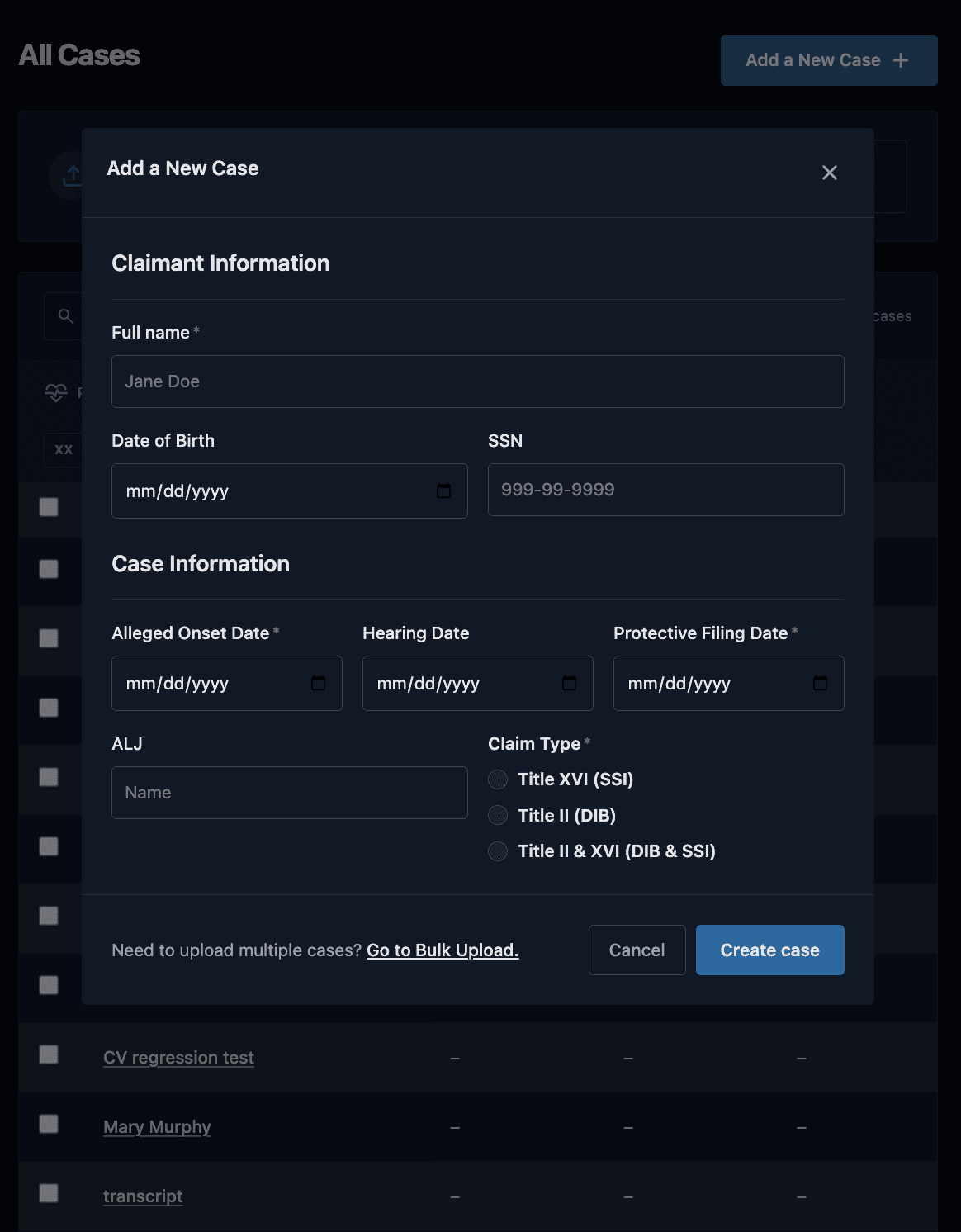
Ability to upload multiple cases at once
Attorney teams have hundreds of cases and records they are juggling, trying to put together winning cases but easily letting details get buried in mountains of redtape.
LexMed allows analysis of medical records and rebuttles to be done in minutes. The bulk upload feature let's them do multiple at once, previously it was one at a time. This makes it easier for the law teams to process more cases at once, takes away the mental load of going one by one, and for LexMed: allows them to sell products in mass.